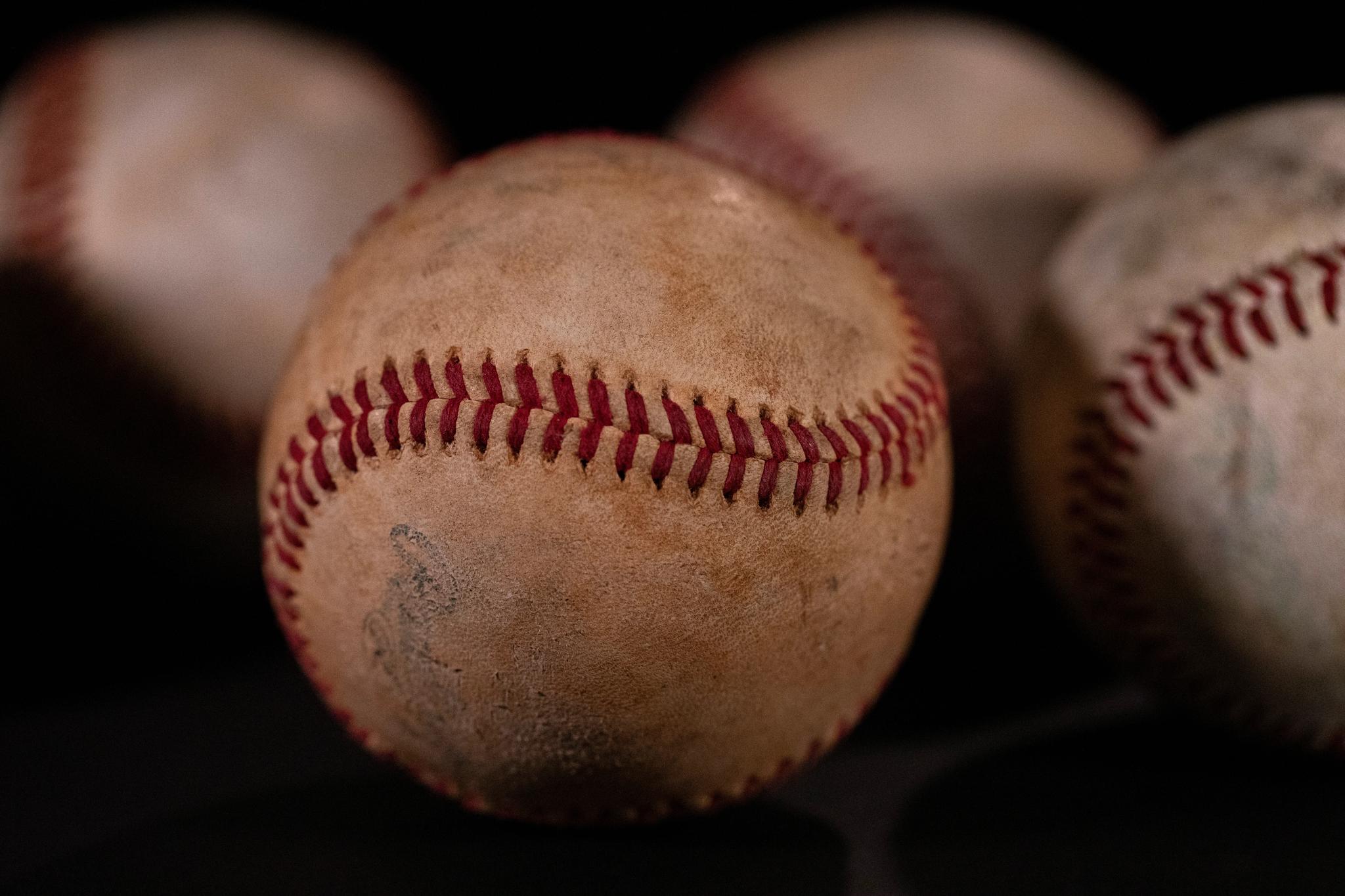
Watching Nostalgia in Silence
Watching Nostalgia in Silence
By Cambria Wright
It is a perfect day. The sun is out, but it’s not the usual Arizona scorching heat that has the back of my thighs sticking to the plastic stadium seats. My phone tells me it’s 82 degrees with the slightest breeze—the perfect weather to watch America’s favorite pastime. Only for me, it’s not just a pastime. As I hear Bruce Springsteen echo through the speakers between innings and hear the soft pop of balls landing in leather gloves, I am at peace.
The crack of a bat causes the stands to erupt as if the air were charged with electricity from the hit’s force. I cheer and turn to gush over the hit to the person next to me. No one is there. The empty seat acts as a silent witness to my excitement. A few seats down there is a couple my age who looks like they chose the Grand Canyon University baseball game as the perfect first date spot, but there is no one to return my grin over the triple. The couple isn’t even watching the game.
Their disinterest makes me feel somewhat childish for caring so much. I suddenly become aware of how loudly I clap, how focused I look when watching a play, and how different my experience of the game feels from everyone around me.
I glance around at the other fans. Some have their eyes on the game, others chat away with their company, but like the couple, most of the younger crowd is too distracted by their phones to notice the base runners. It is the same scene that’s been at every game I’ve attended since I was a kid: people come, they sit, and they look at the field every so often.
“Wait why are we cheering?” I overhear a girl behind me asking her friend.
Irritation grows inside me. Did they not just see that play? Who goes to a baseball game if they aren’t going to holler when our player hits a triple when we’ve been barely able to get on base the entire game? Although it would disappoint my dad, I mentally tell myself to ease down on the cheers the next time there is a good play. After all, my cheers would only be joined by the shouts of elderly men reliving their glory days.
My dad chooses the most fitting moment to text me. He’s asking how the game is going and of course, just like I always do, I tell him everything is good. I don’t tell him that I miss his critiques about every play, his humorous comments about my future husband being a Major League Baseball player, or the joy on his face as he watches young men do what he loved for all those years. Watching my dad come alive in the stadium as he reminisced about his short-lived days in the pros was like watching a child step into Disneyland for the first time. I only wish I had soaked in his enthusiasm during all those Dodgers games instead of letting his hollers and frustrated shouts at the players embarrass me.
Since I can’t break down the entirety of the game with him in person, I give him the spiel via blue text bubbles. I tell him about the triple and add a little joke about the umpire, knowing it will make him laugh. The conversation doesn’t involve an animated exchange of shouts and laughs, but I can hear his voice in my head as if he is sitting right next to me. My dad always explains the finer points of the game – teaching me how to read if the batter was going to bunt or if the pitcher was going to throw a curveball. Through the phone, I reassure him that I have been paying attention to those details for him.
Long before I could differentiate a curveball from a fastball from the stands, my dad taught me the game in our backyard. Summer nights were spent playing catch with a real baseball and glove until we successfully threw and caught it 100 times. I didn’t realize at the time that the number of times where he reminded me to keep my eye on the ball would someday matter more to me – and to him – than whether I actually caught it.
The scent of hot dogs and nachos fills the air, mingling with the fresh-cut grass I can barely catch a whiff of from my seat along the first baseline. My stomach growls. I turn to the person next to me. If I ask him for some loose cash, he will lovingly oblige if I pay him in return with a basket of nachos. No one is there. The empty seat reminds me that I’m no longer the little girl who could trade puppy dog eyes for ice cream. Do I even want to buy ice cream? The only fans I see with the ice cream that comes in a tiny baseball helmet bowl are at least six years younger than me. Although it would disappoint my dad, I head down to the concessions to buy a small Pepsi and pretzel just like every other young adult in the stands. With my own money this time.
Somewhere between Little League games and college stadiums, baseball had become less about the sport itself and more about who I shared it with.
I settle into my seat and sip my Pepsi, eager to know how this neck-and-neck game will end. The crowd erupts once again as the ball rockets into the outfield. Their cheers are the audible resemblance of the young men jumping on each other in the dugout as the ball disappears into the sky which is slowly turning to cotton candy colors.
As I see a small girl jumping up and down with ice cream smeared on her rosy cheeks and wearing an oversized Shohei Ohtani jersey as her dad looks on proudly, I smile. I smile knowing that no matter how far apart my dad and I are, America’s favorite pastime will always be for us.
Homerun. I cheer. I cheer louder. I cheer as if my dad will hear me 1,283 miles away.
The End
Post a comment